Native Species
Trees Worth Protecting
Six native species form the backbone of the North Texas urban forest. Each is uniquely adapted to our soil, climate, and seasons — and each plays a specific role in the canopy that cools our cities, cleans our air, and shelters our wildlife.
Need help? Reach out to your local arborist or tree service, tree farm or nursery, or landscape service company for advice on managing your trees and what to plant.
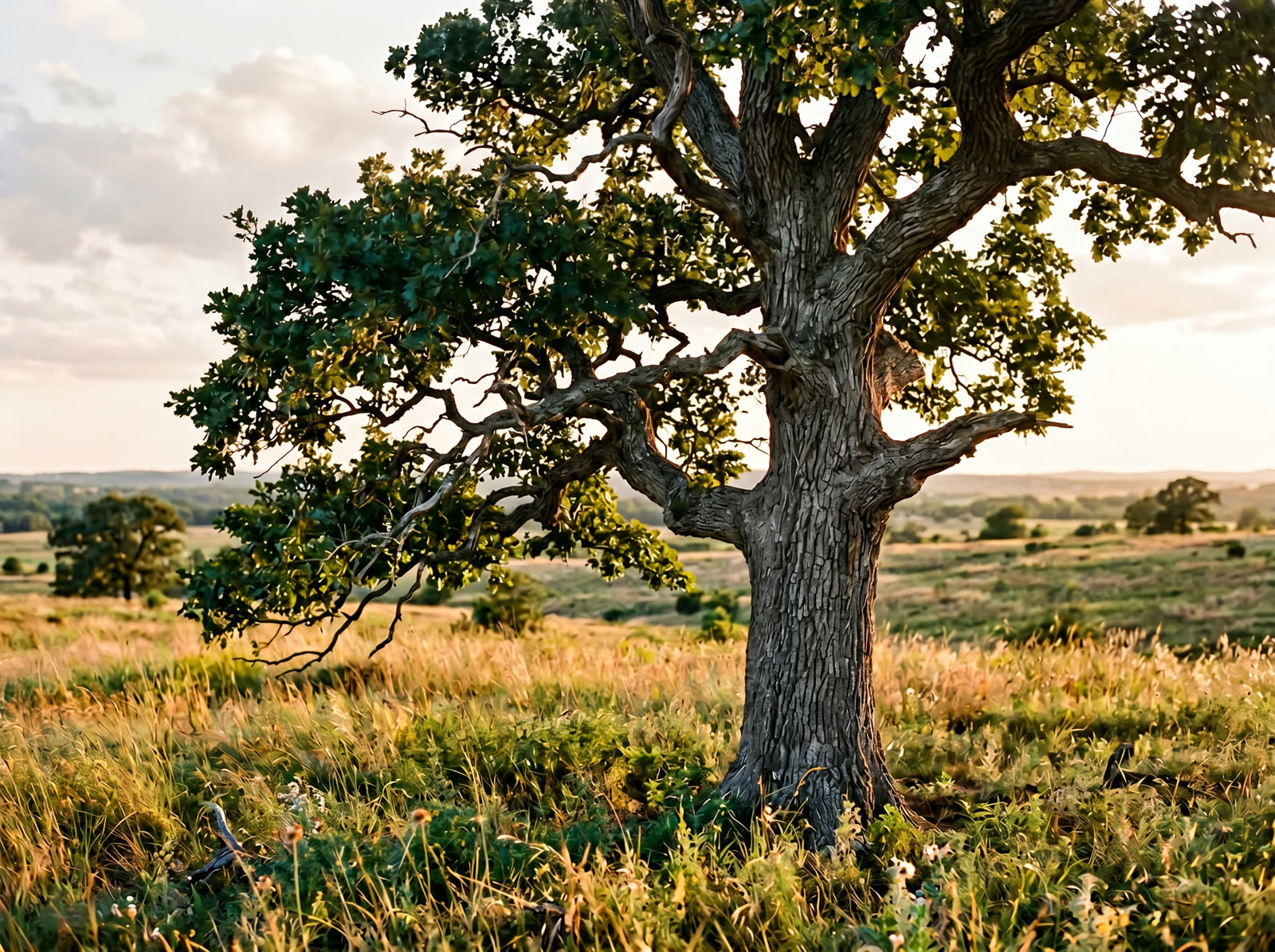
Quercus stellata
Post Oak
The signature tree of the Cross Timbers, the Post Oak is a slow-growing, drought-resistant native that defines the look of North Texas savanna country.
- Height
- 40–50 ft
- Lifespan
- 200–400 yrs
- Leaves
- Cross-shaped, 5 lobes
- Status
- Protected by ordinance
Post Oaks are notoriously hard to transplant or propagate, which is why they're explicitly protected under tree preservation ordinances across Dallas, Fort Worth, Plano, and surrounding municipalities. Their deep taproots make them extremely sensitive to soil compaction and grade changes — a single construction project nearby can kill a tree that's stood for centuries.
Identify them by their stocky trunk, gnarled spreading branches, and the distinctive cross-shaped leaves with five rounded lobes. They thrive in the dry, sandy soils that give the Cross Timbers region its name.
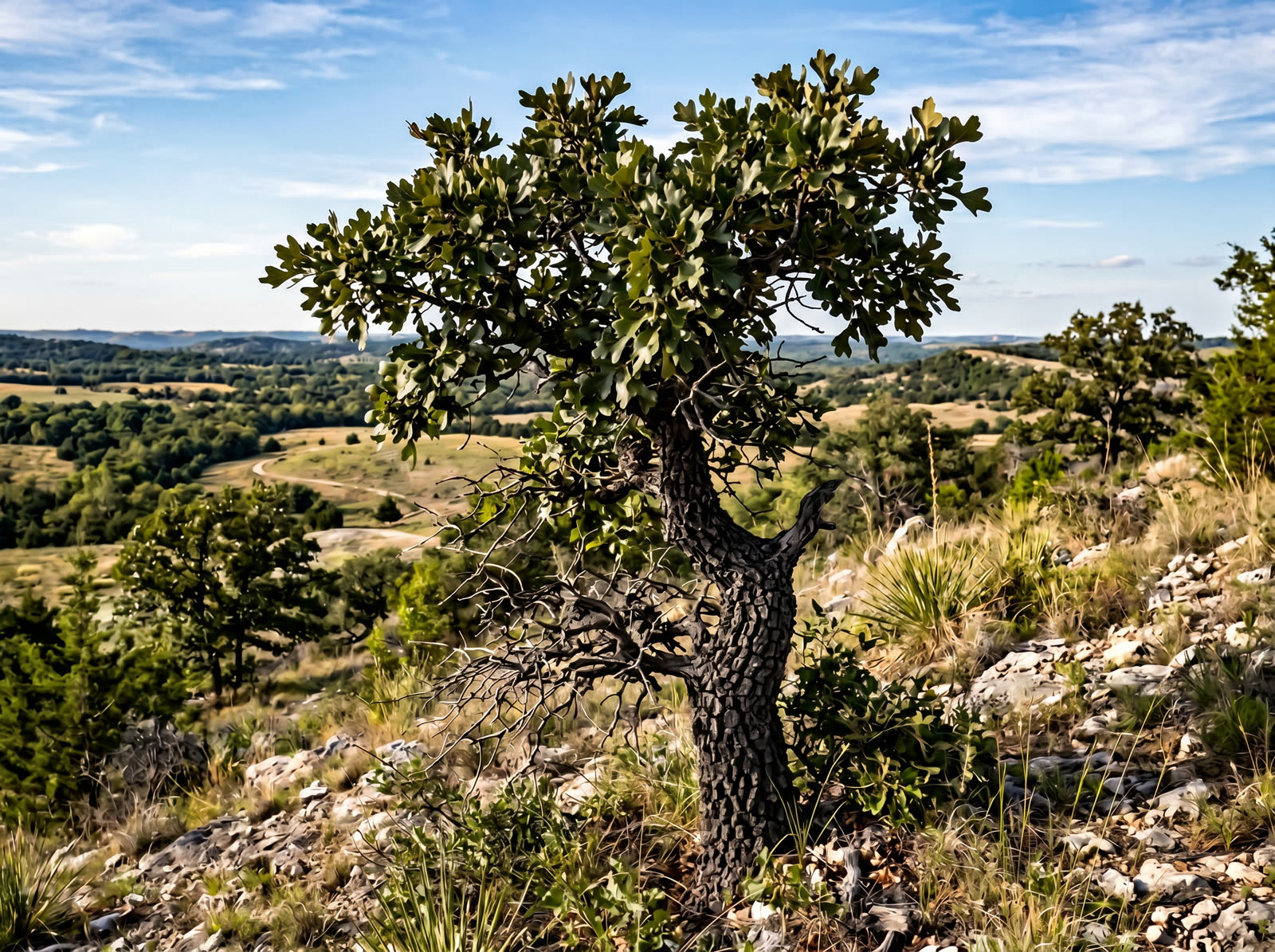
Quercus marilandica
Blackjack Oak
A scrappy companion to the Post Oak in the Cross Timbers, the Blackjack Oak is built for the rocky, nutrient-poor soils where almost nothing else grows.
- Height
- 20–40 ft
- Lifespan
- 100–200 yrs
- Leaves
- Bell-shaped, 3 lobes
- Status
- 50% canopy protection
Blackjack Oaks are easy to spot by their crooked trunks, dark "alligator skin" bark, and the persistent dead lower branches that give them a wild, unkempt silhouette. Tree preservation ordinances across North Texas typically require at least 50% of a property's Blackjack Oak canopy be preserved during development.
Don't let their gnarled appearance fool you — these trees are ecological powerhouses, supporting hundreds of species of insects and providing food and shelter for native birds and small mammals.
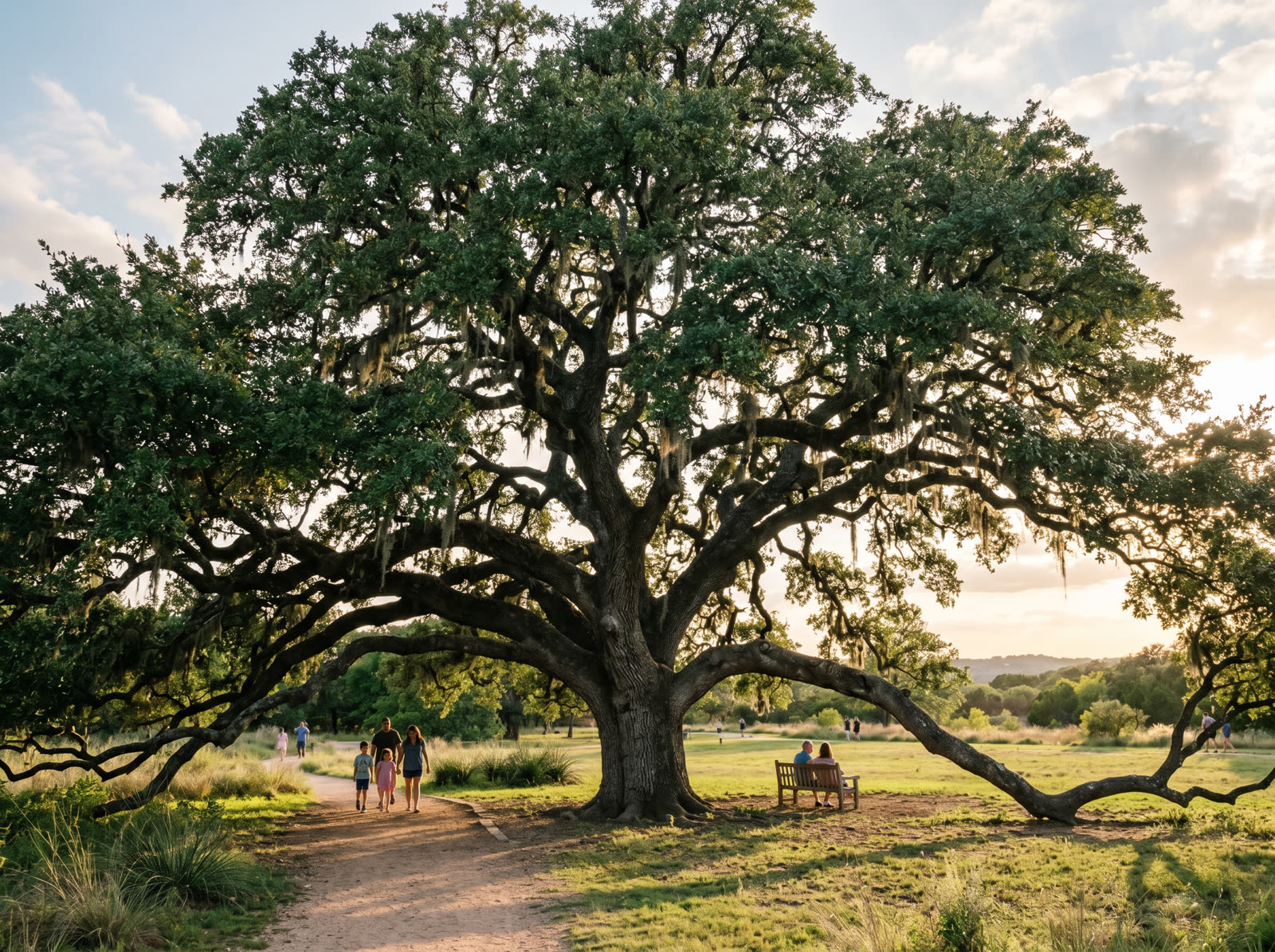
Quercus virginiana
Live Oak
The most iconic shade tree of the South — Live Oaks keep their leaves year-round and grow into wide, sprawling giants that can shelter entire parks.
- Height
- 40–80 ft
- Spread
- 60–100 ft wide
- Lifespan
- 300+ yrs
- Type
- Evergreen
Live Oaks are the workhorses of the urban canopy. A single mature Live Oak can drop the surrounding air temperature by 10°F or more — a critical service in a region where summer ground temperatures regularly exceed 110°F. Their wide-spreading branches often grow horizontally, sometimes touching the ground before turning back upward.
They're remarkably drought-resistant and tolerate a wide range of soils, which makes them a favorite for parks, parkways, and homeowners across DFW. Many of the largest specimens in North Texas are well over 200 years old.
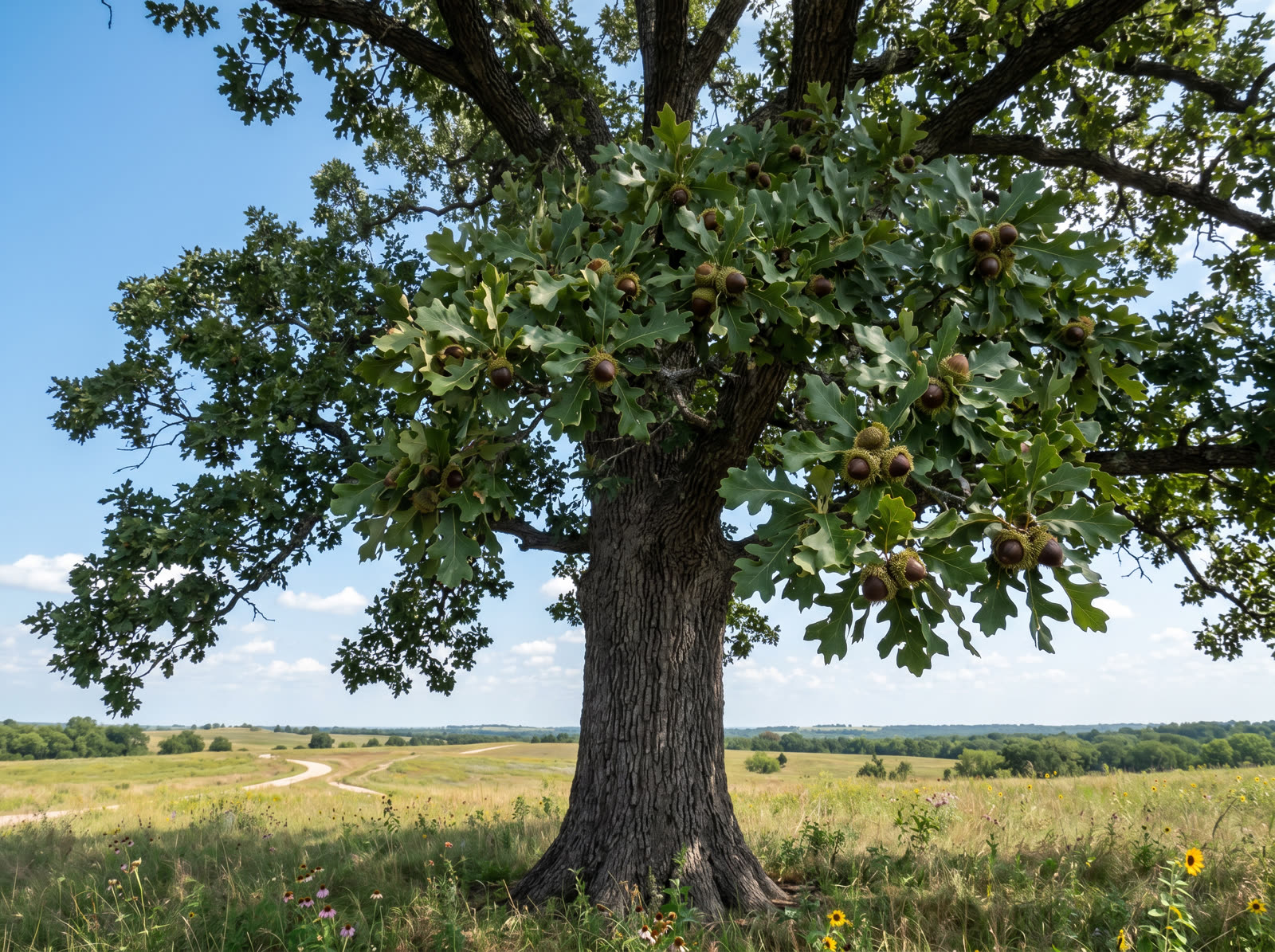
Quercus macrocarpa
Bur Oak
A hardy native with the largest acorns of any North American oak — the Bur Oak's deep roots make it one of the toughest trees you can plant in Texas soil.
- Height
- 60–80 ft
- Lifespan
- 200–300 yrs
- Leaves
- Fiddle-shaped, deeply lobed
- Notable for
- Largest acorns of any N. American oak
The Bur Oak's deep, far-reaching root system is a built-in defense against drought, soil erosion, and wind. That same root system also makes it one of the best trees you can plant in Texas's expansive clay soils, which can crack and shift dramatically between wet and dry seasons.
The signature feature is the acorn — up to 2 inches across, capped with a shaggy fringed cup that gives the tree its name ("bur" referring to the bristly cap). Wildlife from squirrels to deer to wild turkey rely on these acorns through the winter.
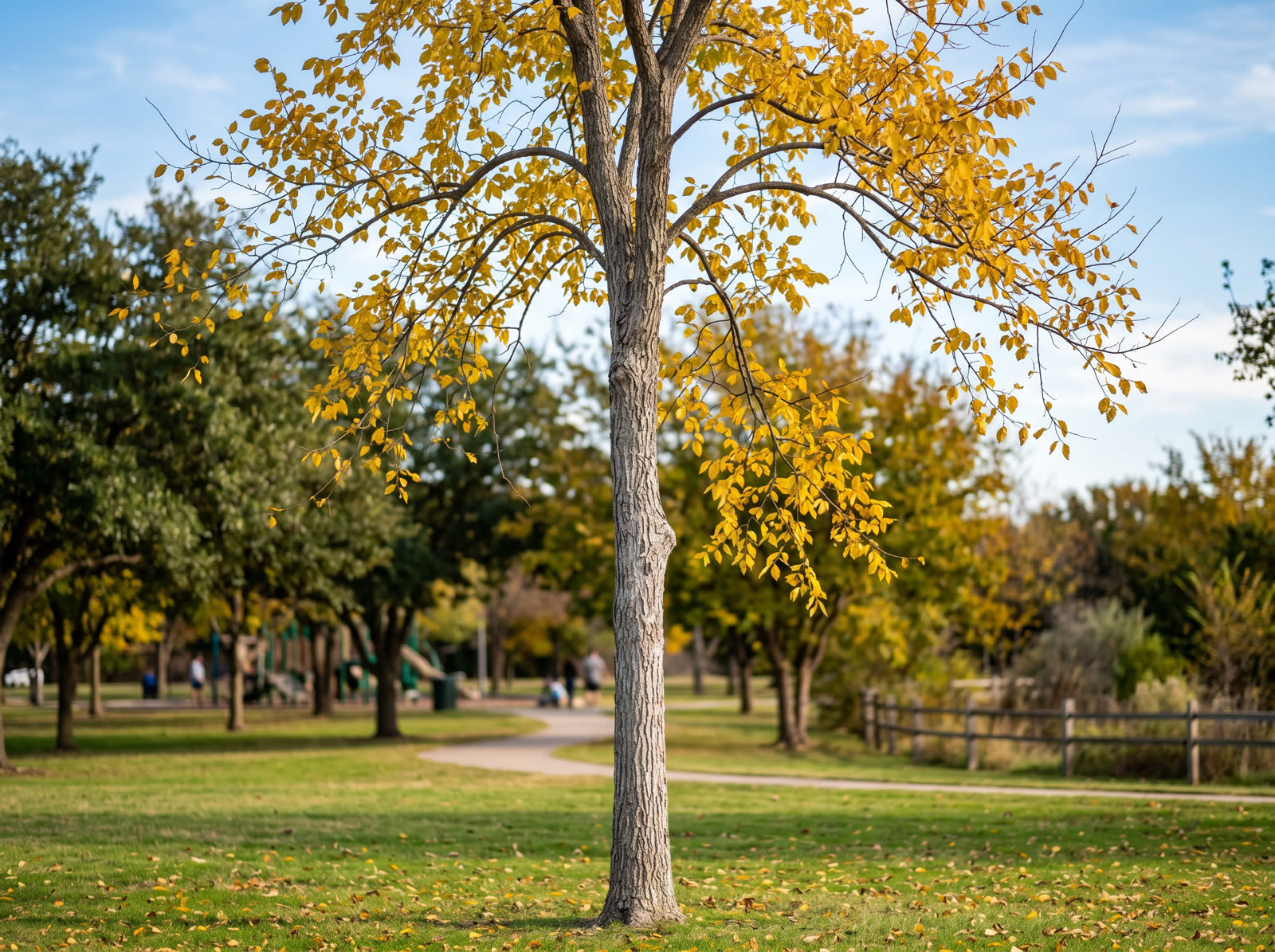
Ulmus crassifolia
Cedar Elm
The most common native elm of Texas — Cedar Elms bring a graceful arching shape and one of the only reliable shows of fall color in the DFW landscape.
- Height
- 50–70 ft
- Lifespan
- 100+ yrs
- Leaves
- Small, sandpaper texture
- Fall color
- Yellow-gold
Cedar Elms are remarkably well-adapted to Texas's variable soils — they grow happily in heavy black clay, rocky limestone uplands, and sandy bottomlands alike. Their small, rough-textured leaves are surprisingly tough and drought-tolerant.
Unlike most elms, Cedar Elms flower in late summer rather than spring, dropping seeds in the fall. They're moderately resistant to Dutch elm disease and one of the most reliable native shade trees for North Texas yards and streets.
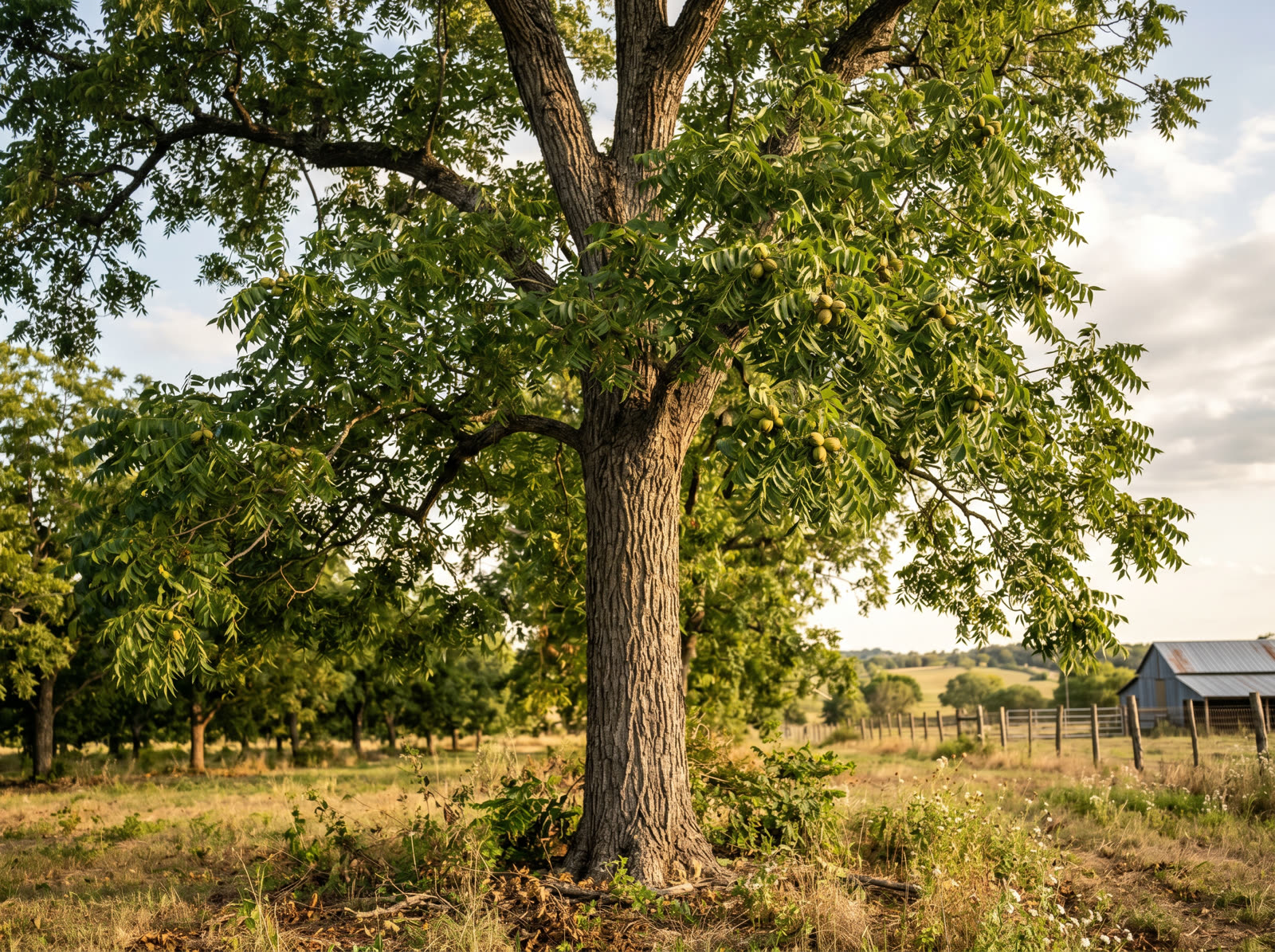
Carya illinoinensis
Pecan
The state tree of Texas — Pecans deliver expansive shade, valuable wildlife food, and the most beloved nut in Southern cooking, all from one tree.
- Height
- 70–100 ft
- Lifespan
- 200–300 yrs
- Leaves
- Pinnately compound, 9–17 leaflets
- State designation
- Texas state tree (1919)
Designated the official state tree of Texas in 1919, the Pecan is native to river bottoms and creek beds across the state. It's a deep-rooted, long-lived tree that produces a massive spreading canopy — and a steady annual harvest of nuts that feeds everything from squirrels and crows to people.
Pecans need plenty of room and deep, well-drained soil to thrive. In a yard or park setting, a mature Pecan can shade a quarter-acre by itself, making it one of the most efficient cooling investments a property can have.